Years of operation: 2021-2024
PIs: M. Loy (Durham), A. Christophilopoulou (Museum of Fine Arts, Boston and Cambridge), and N. Mac Sweeney (Vienna)
Research agenda | Methodology | Digital recording | Results | Back to BSA research


Years of operation: 2021-2024
PIs: M. Loy (Durham), A. Christophilopoulou (Museum of Fine Arts, Boston and Cambridge), and N. Mac Sweeney (Vienna)
Research agenda | Methodology | Digital recording | Results | Back to BSA research
Previous research on the island of Samos has largely focused on the east, principally around the Heraion sanctuary. Yet relatively little was known about the use and occupation of the wider Samian landscape. Before our project the western area of Samos had not yet been the subject of systematic archaeological survey, although preliminary work identified some key sites and monuments. The project’s aim was to investigate landscape use and settlement patterns in western Samos as well as the position of the island in a wider Anatolian-Aegean seascape. We aimed to achieve this through four research themes:
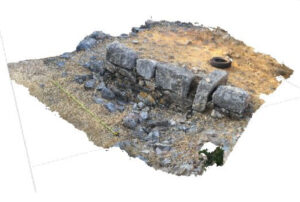
Ancient structure (or structure built of spolia) at Agios Ioannis church
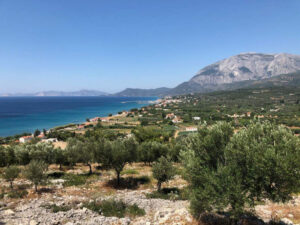
Looking west from Velandia to the area surveyed in 2022
The project employed several methodologies. Extensive survey involved visiting and recording previously known and newly discovered points of interest. Intensive survey employed well-developed techniques of pedestrian fieldwalking where walkers move systematically through 50m transect units, spaced at 10m intervals, recording visible evidence for human activity, and collecting potentially diagnostic potsherds. 2,490 such units were eventually surveyed over the four years of the project (3.6 square kilometres). Total collection in areas of particular interest, recorded in ‘minigrids’ of 10x10m, was also undertaken. Drone survey was employed to create high resolution imagery of the survey area to produce orthophotos and digital elevation models Ethnographic research involved interviews with local inhabitants who can offer first-hand information about past and recent land use, ground features, and resources.
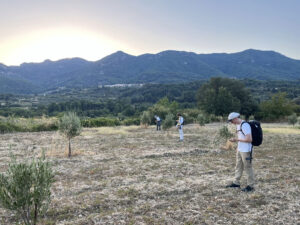
Fieldwalking at sunrise in the Fourniotiko region, west of Hydroussa
Data recording in the field was carried out using Android tablets and the KoBo Collect app, designed to capture both textual and image data in simple forms. Forms were created for recording transects, describing points of interest, inventorying finds, recording specialist analysis of ceramics, and for recording interviews. Born-digital data were imported to GIS for analysis.
About 3.60 square kilometres were surveyed in 2,490 tracts. Over 115,000 potsherds have been counted and just under 7,000 of these collected for study. Some specialist study of sherds has already taken place but more will be carried out in coming study seasons (an article is currently in press in the BSA Annual presenting the pottery from the first two seasons). In total 339 points of interest throughout the survey area have been noted and recorded; these are mainly field structures and buildings. Based on the concentration and quality of surface material, fifty-two areas of interest have been defined.
In southwest Samos the project worked in five main geographical zones or micro-regions. Much of the material documented lay between the villages of Kampos and Ormos, as well as on the slopes of the basin of Velanidia. At Kampos, survey was concentrated around the church of Agios Ioannis, a monument noted by Early-Modern travellers for having been built on and around ancient remains. Little ancient pottery was found in this area, though, with the landscape instead yielding mostly Byzantine tablewares. On the hill of Skoubides above Velanidia, south Ionian and Attic fine tablewares of the Archaic and early Classical periods were found in abundance. Many pieces of Ionian open vessels are similar in character to vessels found at small cult sites on mainland Ionia from this time. Further down the hill, transport amphorae were found in abundance, dating between the Archaic and Byzantine periods. Pottery provenance is overwhelmingly local. While imports from the wider Aegean, Cyprus and North Africa have been identified, they are not great enough in number to indicate substantive participation in wider trade networks.
In northwest Samos, other patterns emerged. Byzantine pottery is abundant in the area of Xirokampos, located at the site of the island’s old leper hospital directly on the coast and east of the town of Karlovasi. A fair amount of ancient material was also collected from here but is thought to have been redeposited in the area through the agricultural practice of armakas construction. Further inland and west of the Fourniotiko river, an area of high density Archaic–Hellenistic material was found. The diagnostic pottery collected includes significantly more tableware pieces than those collected in southwest Samos, and different shapes, too. Prehistoric stone tools was collected around Fourniotiko. Medieval–modern pottery was collected in the environs of Leka and Hydroussa villages, both areas frequently mentioned by interlocutors in the ethnographic survey.
A data release of project field data can be accessed here.
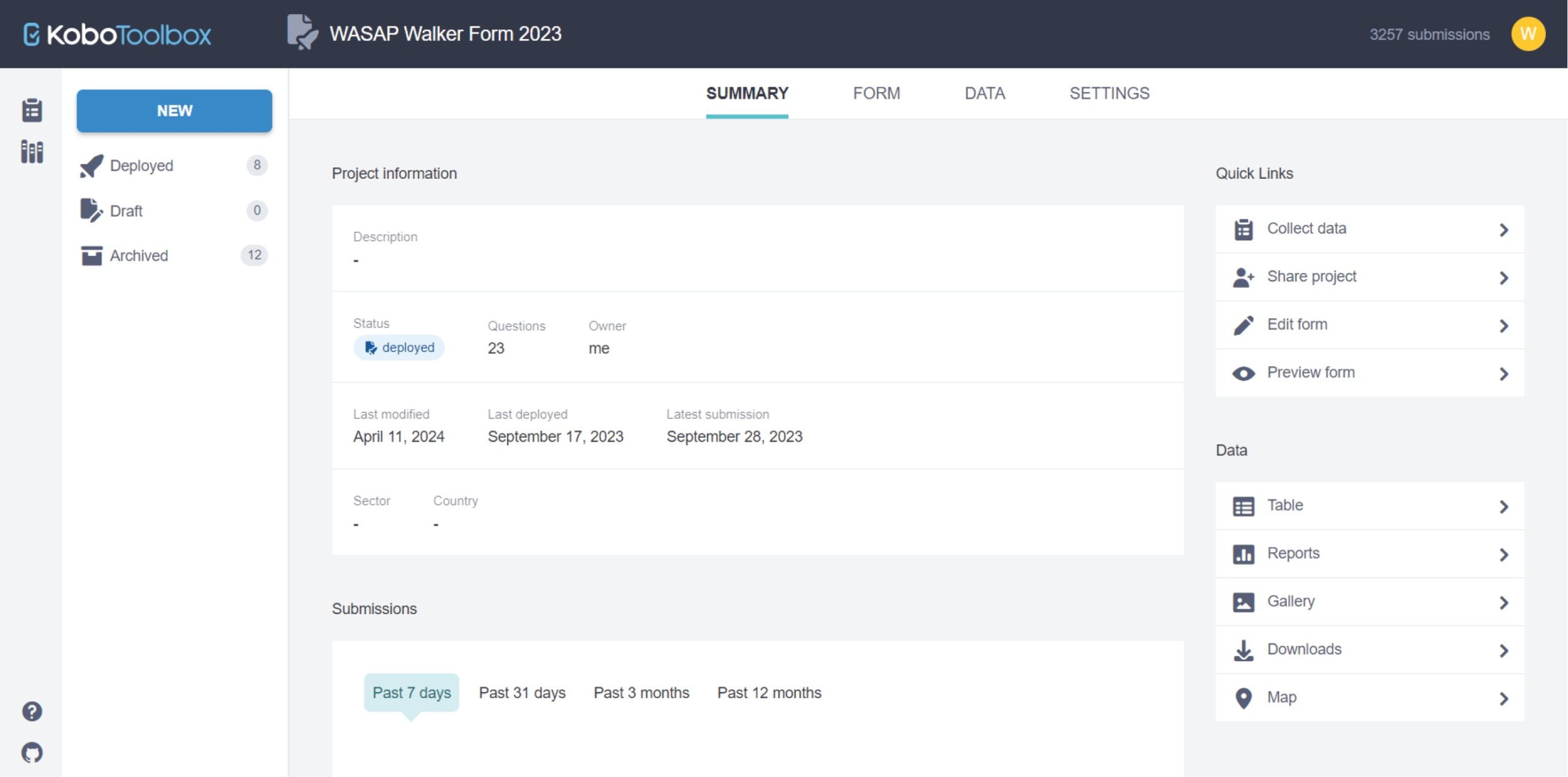
Digital data collection

North Basin tracts walked in 2024 (pink) and in 2023 (blue)