

Events Calendar – British School at Athens

- This event has passed.
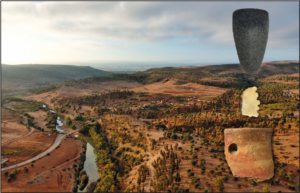
Image credit: Giulio Lucarini & Toby Wilkinson
BSA Friends’ lecture
Professor Cyprian Broodbank (University of Cambridge), ‘The Emergence of Civilisation’, and the Maghreb
Abstract: The ‘long’ third millennium BC is recognised as a crucial period of social change across much of the Mediterranean. In 1972 Colin Renfrew’s magisterial The Emergence of Civilisation: The Cyclades and the Aegean in the Third Millennium BC highlighted the importance of this ‘pre-palatial’ millennium for understanding the origins of the Minoan and Mycenaean societies that followed. It also offered a radical, liberating alternative model of change as something explicable through internal processes rather than necessarily by recourse to external factors. In parallel with transformations in the Aegean, this same period witnessed the emergence of kingship and the state in northeast Africa, and of urbanism in the Levant, while recent work in southern Iberia underscores the dramatic changes underway at the western end of the Mediterranean. It is against this background that new discoveries in northwest Africa can be framed, specifically from new fieldwork by a British-Italian-Moroccan collaboration at Oued Beht in Morocco. These bear witness to a remarkable, hitherto unknown complex farming society on the southern flank of the Mediterranean, as well as the emergence of a long-range maritime network at the far western end of the Mediterranean comparable to the contemporary Aegean’s ‘international spirit’. These perspectives reflect back critically on explanatory discourse within the Aegean, and prompt harder questions as to quite how the trajectories of Aegean societies resemble or differ from those attested elsewhere around the emergent Middle Sea.
Bio: Cyprian Broodbank is Disney Professor of Archaeology and Director of the McDonald Institute for Archaeological Research at the University of Cambridge. He studied History at Oxford, and Aegean and Anatolian archaeology at Bristol, before gaining a PhD from the Faculty of Classics at Cambridge. In 1993 he took up a Lectureship in Aegean Archaeology at the UCL Institute of Archaeology, rising to a Professorship in Mediterranean Archaeology. In 2014 he moved to Cambridge to take up his present post. In 2015 he was elected a Fellow of the British Academy, where he currently serves as Vice-President for the British International Research Institutes. He has held visiting fellowships at All Souls, Oxford, and several institutions in the United States. He is author of numerous papers and articles, as well as two books. The Making of the Middle Sea (2013; revised edition 2024) won the Wolfson History and Nonino Prizes in 2014. Previously, his first book, An Island Archaeology of the Early Cyclades, won the Runciman Award of the Hellenic Society and the James R. Wiseman Prize of the Archaeological Institute of America. His research interests include archaeology as deep global history, comparative approaches to the archaeology and long-term history of the Mediterranean, Aegean archaeology, and the archaeology of islands and maritime connectivity. He co-directs the Kythera Island Project and is currently engaged in fieldwork in Cyprus and at the site of Oued Beht in Morocco. The first publication from the last of these was awarded the 2025 Antiquity Prize, and the Oued Beht research has also been honoured with a 2025 Field Discovery Award from the Shanghai Archaeology Forum.
Hybrid event
To attend online via Zoom webinar, register here
To attend in-person in London, register here
Please do consider a donation to the Friends’ Lectures here: https://www.bsa.ac.uk/donate/
We suggest £10 if you are a BSA Supporter, £15 otherwise. Please quote “Friends Lecture” in the Additional Comments field. Thank you for your generosity!
When: 10 March @ 6:00 pm - 7:00 pm GMT
Where: Room 264 Senate House – London –