

Events Calendar – British School at Athens

- This event has passed.
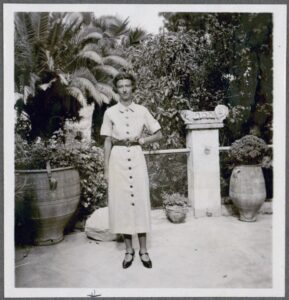
Mercy Money-Coutts at Knossos, Crete, 1937, PEN/7/2/6/667, John Pendlebury Family Papers © British School at Athens.
Women Archaeologists and War
Fourth workshop on Women in the Archaeology of Greece
By the École française d’Athènes and the British School at Athens, with the support of the British Embassy in Athens
Organisers: Priscilla Ralli, Rachel Phillips, Rebecca Sweetman
For its 2026 edition, the workshop focuses on the theme of Women Archaeologists and War. It examines the activities of women archaeologists in Greece in the period from 1910 to 1950, a time characterised by successive and related conflicts across Europe, from the Balkan Wars to World War One and World War Two. This period also includes the interwar years, the time after the end of World War Two, and the Greek Civil War. How did women archaeologists in Greece participate in these war efforts? Can archaeological archives help us to trace women’s roles in wartime?
Women archaeologists took on various tasks in wartime: as nurses, ambulance drivers, code breakers, and aid distributors. They worked in Greek hospitals, with local war charities, and in intelligence offices based in Athens. One example is Mercy Money-Coutts, pictured here, who worked with the United Nations Relief and Rehabilitation Administration in Crete after World War Two. By looking at women’s wartime roles in detail, this workshop aims to explore the different ways that women contributed to war efforts in the early twentieth century, as well as the different aspects of social and cultural history that their actions illuminate. The conference devotes particular attention to the contested narratives surrounding women in wartime, examining both the negative and the positive impact of their actions within the European political landscape. It also highlights intersectional approaches that emphasise the interaction between social categories (such as gender, race, and class) and the broader structural conditions that influenced women’s work.
Hybrid event
09/03/2026 | École française d’Athènes, Conference room, Didotou 6 & Online event
10/03/2026 | British School at Athens, Upper House, Souedias 52 & Online event
To attend in person at the BSA on Tuesday 10/03/26, please register here
When: 9 March - 10 March
Where: British School at Athens, Upper House – Athens – 52 Souedias Street