Research

The British School at Athens exists to conduct, facilitate and promote research on Greece and neighbouring regions across all arts, humanities and social science disciplines in any period from the Palaeolithic to the present. We have a long and distinguished tradition of archaeological research in many periods and have pioneered science-based archaeology in Greece. Our research has never been exclusively archaeological, nor has it been limited to the ancient world; throughout our history other disciplines have featured, including anthropology, linguistics, geography, political science, as well as history, epigraphy, study of literature, art history and philosophy. The historical range of our research is reflected in our journal – Annual of the British School at Athens – which has been published continuously since 1894.

BSA Research

The map here shows the location of recent (since 2010) and current research projects where these have a specific geographical focus.

Each marker is interactive and expands to show basic information for that project, while all recent projects are listed below, whether or not these have a specific geographical focus. The map also shows, with simple dots, all those locations where the BSA has ever sponsored fieldwork.

For simplicity, BSA research is here loosely divided into Antiquity (up to the Byzantine period) and Byzantine and Modern, although in many instances research spans both periods. The lists below reflect this division.

Antiquity

Kato Choria, Naxos

Years of operation: 2022, 2024
PIs: Demetris Athanasoulis (Ephorate of Antiquities of Cyclades), Mark Jackson (Newcastle), Jim Crow (Edinburgh)

Kato Choria is a Byzantine settlement, nestled on the western slope of the hill under the impressive fortress of Kastro Apalirou in south Naxos. Kastro Apaliro is a new foundation of the 7th century CE that must have had a strategic role for Naxos and the surrounding Aegean islands until its siege and consequent abandonment in the early 13th century CE. Located outside the walls of the fortress, the lower site of Kato Choria has previously been overlooked in favour of the monument above, but survey and documentation conducted as part of the Apalirou Environs Project 2015-19 and cleaning in 2022 revealed promising results that point to a developed community, evidenced by well-preserved masonry foundations and agricultural terracing. The 2022 season clearly identified areas of interest for future excavation, as well as providing extensive documentation of surviving remains. In 2024 excavation was carried out in two areas identified in 2022 as promising. Structures and burials were discovered, with dates in the 8th and 9th centuries CE, and perhaps a little later. The project is a synergasia between the Ephorate of Antiquities of the Cyclades and the BSA, with associated researchers from the University of Edinburgh and Newcastle University.

Kato Choria represents an almost unique settlement in the period from the end of antiquity to middle Byzantine times exhibiting a range of forms: long-houses, square dwellings, scooped sites, together with five churches. The investigation and excavation of the site has enhanced our understanding of the Byzantine countryside, especially as current studies focus on the middle and late Byzantine and Frankish periods.

More details

West of Samos Archaeological Project

Years of operation: 2021-2024
PIs: Michael Loy (Durham), Anastasia Christophilopoulou (Boston Museum of Fine Arts), Naoíse Mac Sweeney (Vienna)

In the first millennium BCE, the island of Samos was active in maritime trade and a place of pilgrimage due to its famed Sanctuary of Hera, which attracted more international visitors and dedications than any other Greek sanctuary. The island of Samos was also exceptional in that it was dominated by a single city-state in the east, the polis of Pythagoreio. Despite potentially significant economic resources in the west, an independent polis never developed here. In the Byzantine period, smaller settlements and a network of rural churches were built in the west, but with only a small second-order settlement at Karlovasi. This configuration contrasts with other large Aegean islands, such as Rhodes, Chios, and Lesbos, which were home to multiple city states with oft-competing territorial relationships. The West of Samos Archaeological Project aimed to analyse how the rural landscape of the west of the island developed—and to assess whether or not this area really was a ‘blackspot’ in terms of antique settlements.

The project was a four-year (2021-2024) investigation of the western part of Samos using field techniques (aerial prospection, field walking, photogrammetry), alongside literature and ethnographic research. The four seasons have been completed and an area just under 8 square kilometres has been investigated.

More details

Emborio Hinterland Project

Years of operation: 2021, 2023-2024 (field); 2022, 2024-2025 (study)
PIs: Olga Vassi (Ephorate of Antiquities of Chios), Andrew Bevan (UCL)
Emborio in southeast Chios was one of the most important sites excavated by the BSA in the twentieth century. The Emborio Hinterland Project is designed to provide archaeological and environmental context. Chios forms a bridge between the wider Aegean and Anatolia, specifically the Çeşme peninsula, an area rich with prehistoric sites. Emborio itself is an acropolis with significant Neolithic and Early, Middle and Late Bronze Age occupation. From the eighth century BCE a sanctuary of Athena was established on the hill, in use until the Hellenistic period, with an associated settlement (of the eighth and seventh centuries). The area of the sanctuary was turned into a church in the middle of the first millennium BCE.
The aim has been to investigate 10 km² of hinterland around this long-occupied site, to provide a landscape-scale context for archaeological remains of all periods. Survey began in 2021, and in 2023 continued on a larger scale, with completion of the survey in 2024. Besides pedestrian survey, drone-based landscape recording and geophysical survey were carried out. It is hoped to complete study in 2025.

More details

Toumba Magnetometer surveySerron Research Project

Years of operation: 2021 (survey), 2022-2024 (excavation)
PIs: Dimitra Malamidou (Ephorate of Antiquities of Serres), James Taylor (York), Nicolas Zorzin (Université Paris 1 – Panthéon-Sorbonne)
Investigating life in the Late Neolithic (ca. 5300-4500 BCE) in northern Greece, the Toumba Serron Research Project is centred upon the village site of Toumba Serron, situated in the dynamic lakeland environment of the northern side of the Strymon River Valley near Serres. The project is multi-disciplinary and involves survey and excavation. It is focussed upon dating the site, a long-lived ‘tell’ (mound), and understanding the social and economic structure of the communities that lived there, as well as studying the wider prehistoric landscape of the Strymon Valley. As a collaboration between the Greek Ministry of Culture, York University, and Paris 1 Panthéon-Sorbonne, the project is developing a hybrid digital field recording methodology, which includes the use of drones and the capturing of 3D models in the field. It also includes the construction of a comprehensive Geographic Information System and the digitisation of all data recorded during the excavation. Three seasons of excavation have been carried out so far (2022-24), preceded by geophysical and pedestrian survey (2021).

More details

Chiona-East Beach, Palaikastro, Crete

Years of operation: 2021-2023
PIs: C. Sofianou (Ephorate of Antiquities of Lasithi), T. Theodoulou (Ephorate of Underwater Antiquities), C. Knappett (Toronto), A. Shapland (Oxford)

Palaikastro, in eastern Crete, has been a long-term focus of BSA research since 1902. Large parts of an extensive and long-lived Minoan town have been uncovered. Buildings and neighbourhoods ranging from Prepalatial (third millennium BCE), to Protopalatial, Neopalatial and Postpalatial (the whole second millennium BCE) have been excavated. Palaikastro was clearly a large and significant Minoan centre although thus far no ‘palace’-type structure has been located.

The Chiona-East beach project began in 2021 with the aim of investigating sea level change since the Bronze Age and the possibility of underwater structures and harbour infrastructure. The programme detected several prehistoric structures in Kouremenos bay along with Roman harbour installations; 3D visualisations of these buildings were created in 2023. In Chiona bay further Roman buildings were detected along with a Roman shipwreck further away at Cape Plako. A second shipwreck was noted in 2023. In 2022 the project excavated on the Chiona promontory at the south end of Chiona beach. Walls of the Hellenistic period overlay those of the Late Bronze Age. Further south on the East beach two other trenches containing Late Bronze Age walls were excavated.

More details

Olynthos
Years of operation: 2015-2019
PIs: Bettina Tsigarida (Ephorate of Antiquities of Pella), Zosia Archibald (Liverpool) and Lisa Nevett (Michigan)
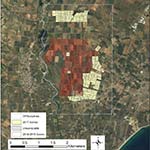
This collaborative, multidisciplinary project, deploying high-resolution excavation, geophysical prospection and field survey, aims to recover a uniquely detailed picture of Greek households as social and economic units, within their broader neighbourhood, urban and regional settings.

 

Keros-Naxos Seaways
Years of operation: 2015-2018
PIs: Colin Renfrew (Cambridge) and Michael Boyd (Cambridge)
This multidisciplinary project, deploying high-resolution excavation and field survey, seeks to extend our understanding of the Early Bronze Age settlement hierarchy from Keros to the neighbouring zones of southeast Naxos and Kato Kouphonisi, to investigate the nature of Early Bronze Age settlement on Keros, and to investigate in detail the settlement on Dhaskalio.
 

Knossos Roman Geophysics
Years of operation: 2015-2018
PIs: Daniel Stewart (Leicester) and Jennifer Baird (Birkbeck London)
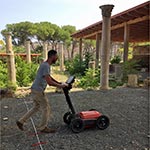
This geophysical survey project (using magnetometry, resistivity and ground-penetrating radar) focused on Roman Knossos aims to generate a working knowledge of the urban layout to aid the understanding of extant remains, and facilitate the study of the extensive collection of Roman material culture from BSA excavations retained in the Stratigraphical Museum.
 

Koutroulou Magoula Archaeology and Archaeological Ethnography Project
Years of operation: 2010-14; 2015-19
PIs: Nina Kiparissi-Apostolika (Director Emerita, Ephorate of Palaeoanthropology and Speleology of Southern Greece), Yannis Hamilakis (Brown)
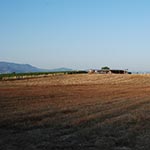
This collaborative project, deploying high-resolution excavation, environmental investigation (on- and off-site) and ethnography, seeks to explore Neolithic habitation and life in and around the tell of Koutroulou Magoula, as well as to secure the long term preservation of the site and to carry out a long-term ethnographic study together with community archaeology activities and projects.
 

Knossos Gypsades
Years of operation: 2014-19
PIs: Ioanna Serpetsidaki (Ephorate of Antiquities of Herakleion), Amy Bogaard (Oxford), Gianna Ayala (Sheffield) and Eleni Hatzaki (Cincinnati)
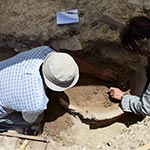
This collaborative project, deploying high-resolution excavation, detailed environmental investigation and micromorphological techniques aims to reveal a Knossian neighbourhood by uncovering fine-grained data on consumption, the nature and role of agricultural production and broader issues surrounding the emergence, maintenance and decline of the Knossian urban elite.
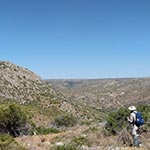
 

Kythera Island Project – Paliokastro
Year of operation: 2017
PIs: Cyprian Broodbank (Cambridge), Evangelia Kiriatzi (BSA), Andrew Bevan (UCL) and Ioannis Petrocheilos (Ioannina)
This project, an extension of the Kythera Island Project, seeks to reinforce and extend our understanding of Kythera’s inland urban centre at Paliokastro through intensive fieldwalking, geophysics and Unmanned Aerial Vehicle (‘drone’) survey, with a view to refining our understanding of the main timelines of human activities; better characterising their changing spatial footprint; and situating this key area more systematically within wider island and regional research agendas.
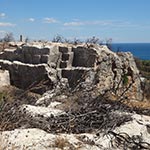
 

Kenchreai Quarries Survey
Years of operation: 2013-16
PI: Christopher Hayward (Edinburgh)
This project, deploying intensive pick-up survey, geophysical prospection and some test excavation aims to identify periods of quarrying and types and locations of post-quarrying activity in the ancient quarries of Kenchreai, in order to achieve a holistic understanding of a major Greek quarry complex, the material culture of stone extraction, the subsequent use of the space and its integration into local and regional historical and cultural contexts.
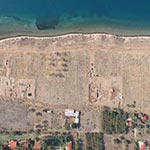
 

Lefkandi
Years of operation: 2003-11
PI: Irene Lemos (Oxford)
This project seeks to investigate in detail the settlement on the Xeropolis Hill principally in its EIA phases (http://lefkandi.classics.ox.ac.uk/).
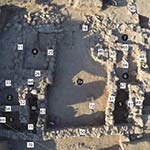


Palace and Landscape at Palaikastro
Years of operation: 2012-15
PIs: Carl Knappett (Toronto), Nicoletta Momigliano (Bristol) and Alexandra Livarda (Nottingham)
This project examines a hitherto unexplored region of the BA town of Palaikastro and its larger region using multiple approaches, including high-resolution excavation, as well as environmental study, palaeoenvironmental sampling through coring, sampling for ceramic petrography and micromorphology, conservation, education, and experimental archaeology.


Byzantine and Modern

Unpublished archives of British Philhellenism during the Greek Revolution of 1821
PI: Dr Michalis Sotiropoulos (BSA 1821 Fellow in Modern Greek Studies)
Project team: Ms Amalia Kakissis (BSA Archivist), Ms Felicity Crowe (BSA Archive Project Assistant)
Academic Adviser: Professor Roderick Beaton, King’s College London and BSA

This project, carried out in collaboration with the National Library of Greece, and with generous support from the Stavros Niarchos Foundation, aims at shedding new light on the relationship between Philhellenism and the Greek Revolution of 1821. It will do so by creating a digital archive that will go live in stages during 2023 and 2024 and will include original items from the unpublished archives of Captain Frank Abney Hastings (1794-1828) and Scottish volunteer and historian George Finlay (1799-1875) with commentary that will be fully searchable. Other highlights of the project include the international conference that was held in Athens during 15-17 March 2023 and an edited volume to be published in the BSA’ s Modern Greek & Byzantine Studies series.

Reclaiming the Land: Belonging, Place, and Environmental Transformation in Western Thessaly

PI: Huw Halstead (BSA Macmillan-Rodewald Student 2017-18/St Andrews)
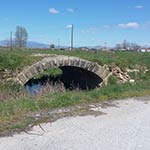
This project explored the effects on local inhabitants’ sense of place of an extensive land reclamation and redistribution scheme undertaken by the Greek state in the plain of Karditsa in the late 1960s/early 1970s. Through oral history, archival sources, and ethnographic field walks, the research uncovered a salient local memory of the land reclamation/redistribution as a positive and modernising development that saved locals from a life of poverty, tempered, nevertheless, by a sense of loss over the way things were before the environmental changes.


Changing spaces of refuge: histories and geographies of displacement amidst the politics of crisis in Greece

PI: Eirini Avramopoulou (Panteion University)
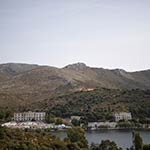
This project, carried out while AG Leventis Research Fellow at the BSA, explored the increasingly intense impact the refugee crisis of the last years had on a national and international level. The focus was on Leros island, which provided a hub to investigate the condensed histories of displacement, uprootedness and violence that the project needed to address. In these loaded historical, social and political circumstances, the project sought to understand the notion of finding ‘refuge’, as it changes historically and as part of the changing shape of crisis politics, as well as the relation between the materiality of space, the ghosts of war and exile, and the experiences of contemporary displacement and confinement caused by the new realities of ‘refugeeness’.